Table of Contents
- What Experimental Repeatability Actually Means in Practice
- Lab Reproducibility Best Practices: A Framework for Consistent Results
- How to Document Lab Protocols So Anyone Can Repeat Your Work
- Equipment Calibration and Maintenance for Repeatable Measurements
- The ISO/IEC 17025 Testing Importance for Research Material Verification
- Troubleshooting Failed Repeatability: When Results Don’t Match
- Cost-Benefit Analysis: Where to Invest in Repeatability Tools
- Frequently Asked Questions
Last Updated: September 15, 2026
What Experimental Repeatability Actually Means in Practice
Experimental repeatability is the degree to which the same operator, using the same equipment and the same materials, obtains consistent results across repeated runs of an identical procedure. This guide from Minuteman Peptides breaks down the practical controls that separate a lab that repeats its own numbers from one that merely hopes to.
The distinction matters because “repeatability” and “reproducibility” get used interchangeably in casual conversation and mean different things in a methods section. Repeatability is narrow: one operator, one instrument, one day, tight conditions. Reproducibility is broader: a different operator, a different instrument, possibly a different lab, same reported result. When people talk about the reproducibility crisis in the life sciences, they are usually describing the second problem, but the root cause is almost always a failure of the first (pubmed.ncbi.nlm.nih.gov). If a procedure cannot survive being run twice by the same person on the same bench, it will never survive a transfer to another institution.
A common mistake is treating repeatability as a statistical property you measure at the end rather than a design property you build in from the start. By the time you are running the ANOVA, the protocol has already either controlled its variables or it hasn’t.
Repeatability vs. Reproducibility: The Distinction That Changes Your Protocol
Repeatability measures agreement between successive measurements of the same quantity under identical conditions. Reproducibility measures agreement when the conditions change: new operator, new lot of reagent, new instrument, new facility.
That single difference dictates your documentation strategy. A repeatability study only needs to record the variables you deliberately held constant. A reproducibility study needs every variable that could have drifted, because the whole point is to see whether drift changes the answer. Teams that document for repeatability and then attempt a multi-site study discover too late that they never captured reagent lot numbers, ambient temperature, or instrument firmware versions. The data exists; the metadata does not.
If your protocol is destined for transfer, build the reproducibility-grade documentation from day one. Retrofitting it costs more than writing it correctly the first time.
Lab Reproducibility Best Practices: A Framework for Consistent Results
Lab reproducibility best practices rest on three pillars: standardized procedures, controlled variables, and documented provenance. Neglect any one and the other two cannot compensate.
The framework below scales from a two-person academic group to a contract research organization running validated assays.
| Pillar | Core Control | Failure Mode If Missing |
|---|---|---|
| Standardized procedures | Written SOPs with revision control | Operator-to-operator drift |
| Controlled variables | Defined ranges for temperature, timing, reagent lot | Systematic error masquerading as biology |
| Documented provenance | Metadata capture at point of use | Unreproducible results with no audit trail |
Standardizing Experimental Procedures Across Operators
Write the SOP so a competent scientist who has never seen the assay can execute it without asking a question. If they have to ask, the SOP is incomplete.
This sounds obvious and is routinely ignored. The test is not whether your current team understands the protocol, it is whether a new postdoc can follow it cold. Practical fixes:
- Specify volumes in microliters, not “approximately”
- State acceptable ranges for incubation temperature rather than a single setpoint
- Define the acceptance criteria for each intermediate step, not just the final readout
- Include a worked example of a passing run and a failing run
A common mistake is writing SOPs at the level of scientific intent (“lyse the cells”) rather than operational instruction (“add 500 µL of lysis buffer, pipette 10 times, incubate 5 min at room temperature”). The first version is a paper, not a protocol.
Controlling Variables and Managing Measurement Error
Split your error budget into systematic and random components before you try to reduce either. Systematic error shifts every measurement in the same direction: a miscalibrated pipette, a reagent that has degraded, a plate reader with a wavelength offset. Random error scatters in both directions and shrinks with replication.
The two require opposite responses. More replicates reduce random error and do nothing for systematic error. Only calibration, validation, and reagent control address systematic error. Teams that reflexively add replicates are often chasing the wrong term.
Adding replicates to a system with unaddressed systematic error inflates your confidence without improving accuracy. You will report a tight confidence interval around a wrong mean, which is worse than a wide interval around a right one.
How to Document Lab Protocols So Anyone Can Repeat Your Work
Document lab protocols at the level of a reproducible recipe: every reagent identified by vendor and lot, every instrument by serial number and calibration date, every step with an explicit acceptance criterion.
The documentation standard that matters is whether an independent reviewer could reconstruct exactly what happened. That requires more than a methods paragraph.
Protocol Versioning and Data Provenance
Treat your protocol as versioned software. Every change gets a version number, a date, and a reason. When results from March and results from August disagree, you need to know whether the protocol changed between them.
Data provenance is the record of where every data point came from: which instrument, which run, which operator, which reagent lot. Without it, a discrepancy is a mystery. With it, the discrepancy is usually a five-minute lookup.
At minimum, capture:
- Protocol version identifier
- Operator initials and date
- Instrument ID and last calibration date
- Reagent catalog number and lot number
- Raw data file name and storage location
Store raw instrument output unmodified alongside any processed version. Processed data can be regenerated from raw data; raw data cannot be regenerated from processed data. Labs that overwrite raw files during analysis lose their audit trail permanently.
Equipment Calibration and Maintenance for Repeatable Measurements
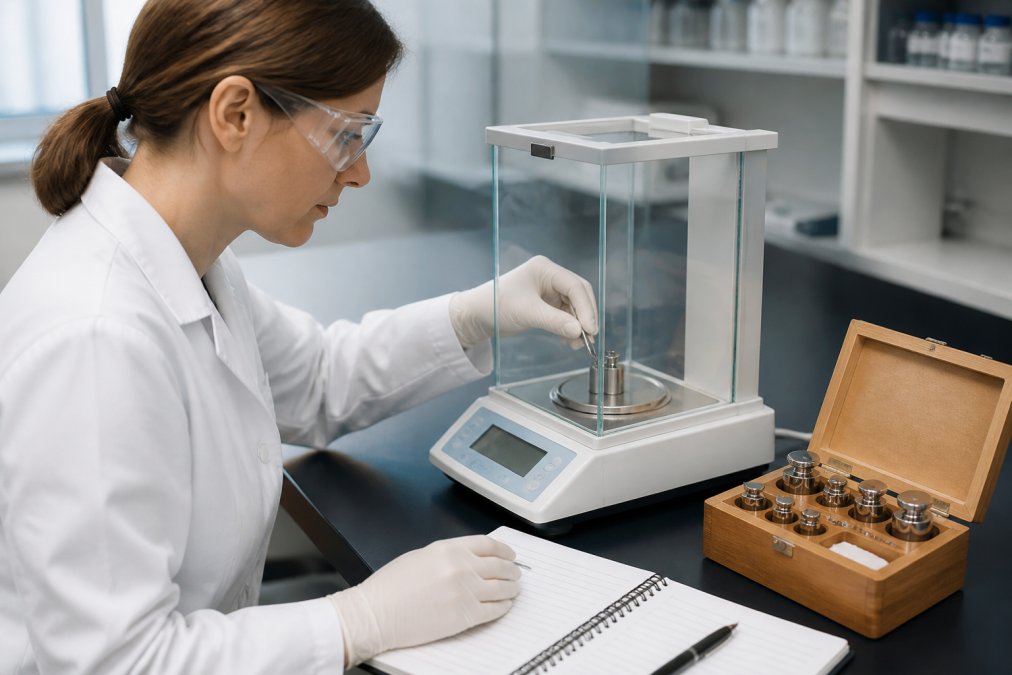
Calibrate on a schedule tied to use, not to the calendar alone.
The ISO/IEC 17025 Testing Importance for Research Material Verification
What Third-Party Testing Actually Verifies
Troubleshooting Failed Repeatability: When Results Don’t Match
A structured triage:
Cost-Benefit Analysis: Where to Invest in Repeatability Tools
A rough priority order for most labs:
| Investment | Relative Cost | Repeatability Impact |
|---|---|---|
| Written SOPs and version control | Low | High |
| Calibration and maintenance schedule | Low | High |
| Reagent lot tracking | Low | High |
| Automated liquid handling | High | Medium to high |
| LIMS implementation | High | Medium |
| Analysis pipeline version control | Low to medium | High |
The highest-return repeatability investments are documentation and calibration, not instrumentation. A lab with disciplined SOPs and a working balance will outperform a lab with automated liquid handling and no version control.
Frequently Asked Questions
How do I improve the repeatability of an experiment?
Start by writing a detailed standard operating procedure that specifies every step, reagent lot, equipment setting, and environmental condition. Train all operators on the same protocol and run pilot replicates to identify sources of variation. Calibrate instruments before each session and record all metadata. When you source research compounds, use materials with verified Certificates of Analysis from ISO/IEC 17025 certified testing so reagent consistency is not a hidden variable. Small changes in timing, temperature, or handling can shift results, so document and control each one.
What is the difference between experimental repeatability and reproducibility?
Experimental repeatability measures whether the same operator, using the same equipment and protocol in the same lab, gets consistent results across multiple runs. Reproducibility tests whether a different lab, operator, or equipment setup can achieve the same findings. Repeatability is the tighter, narrower measure. You need both for scientific rigor, but repeatability comes first because you cannot expect another lab to reproduce your work if your own lab cannot repeat it consistently. Inter-laboratory studies and round-robin testing specifically evaluate reproducibility.
What role do cGMP-certified materials play in experimental repeatability?
cGMP-certified materials are manufactured under current Good Manufacturing Practice controls, which means each batch is produced with documented processes, tested for purity, and traceable to its source. When your research compounds vary between batches, you introduce reagent inconsistency that undermines repeatability regardless of how carefully you control other variables. Sourcing from cGMP-certified facilities with independent ISO/IEC 17025 testing gives you batch-to-batch consistency you can verify through HPLC and mass spectrometry data before running your experiment.
How can third-party testing verify the consistency of research compounds?
Independent ISO/IEC 17025 certified laboratories test compounds using methods like HPLC for purity quantification and mass spectrometry for molecular identity confirmation. Because these labs have no financial stake in the result, their data provides an unbiased verification of what is actually in the vial. When you receive a Certificate of Analysis from a third-party lab, check that it includes the specific test method, the instrument used, the lot number, and the date of analysis. This documentation lets you compare batches over time and confirm that your starting materials remain consistent across an 18-month study.
Why is repeatability critical for scientific validity?
Without repeatability, you cannot distinguish a real biological effect from random error or systematic drift. Funding agencies, peer reviewers, and regulatory bodies expect that reported findings can be independently verified. The reproducibility crisis in biomedical research has shown that many published results fail when other labs attempt to replicate them, often because the original work lacked sufficient documentation of control variables, equipment calibration, and reagent sourcing. Building repeatability into your protocol from the start protects both your conclusions and your publication record.
What should I do when my lab results are not repeatable?
Work through a systematic troubleshooting sequence. First, check reagent lots and compare Certificates of Analysis for purity or concentration shifts. Second, verify equipment calibration records and run a known standard to confirm instrument performance. Third, review protocol documentation for undocumented deviations by any operator. Fourth, examine environmental variables like temperature, humidity, or vibration that may have changed. Fifth, run a controlled test-retest with a single operator and fresh reagents to isolate whether the problem is procedural or material-related. Document each step so the investigation itself becomes part of your quality record.